


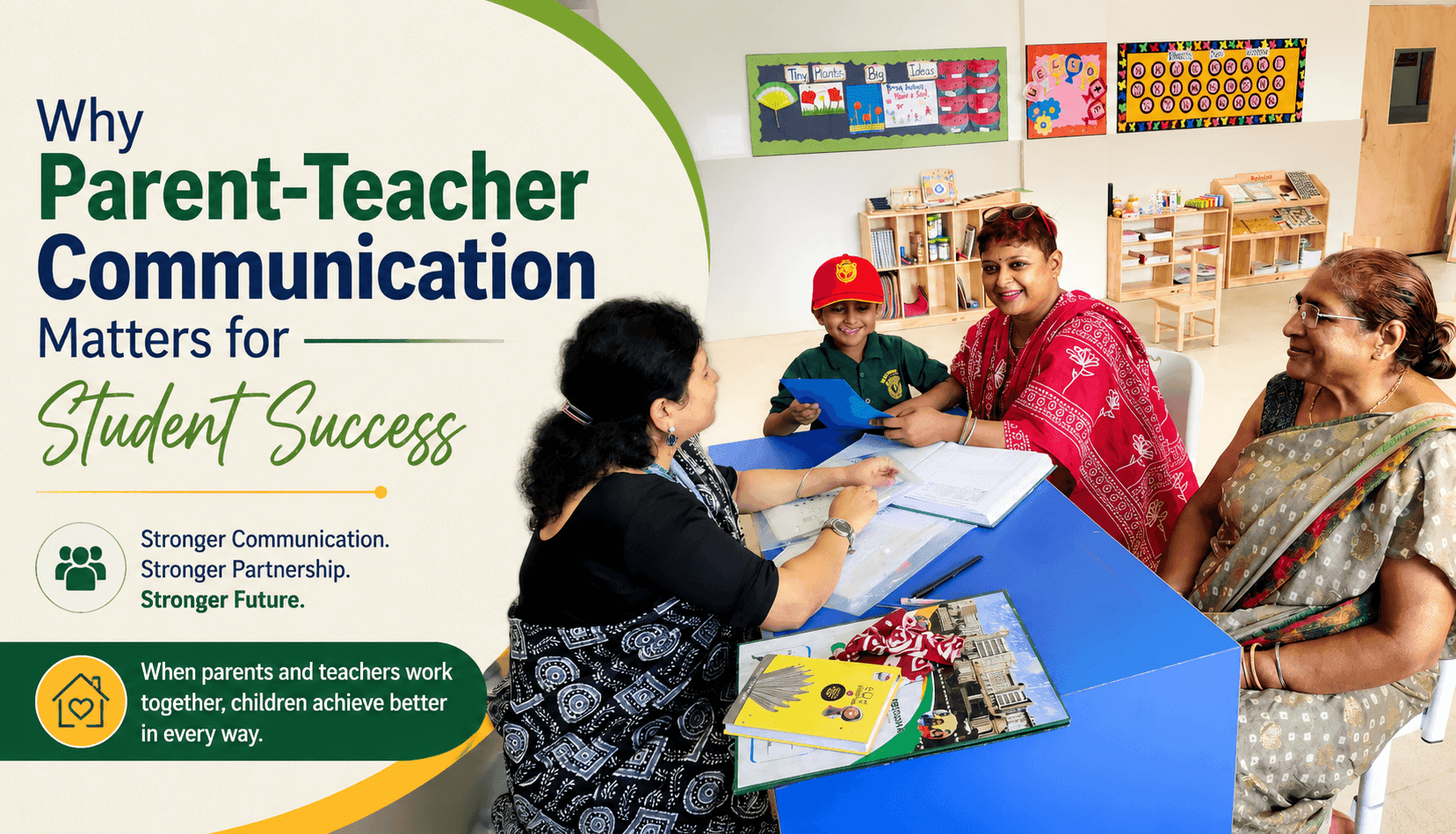
Why Parent-Teacher Communication Matters for Student Success
July 31, 2026
Your child's marks dip, they go quiet at dinner, and you only find out weeks later. Discover why parent-teacher communication is the missing link in student success — and how small, regular conversations can change everything
It often starts with a small sign. A child seems quieter at dinner, homework takes longer than usual, or marks dip slightly. Many parents only discover that something was wrong — a friendship falling apart, a topic the child never understood, growing exam anxiety — after it has already become a bigger problem.
This is where parent-teacher communication for student success makes the difference. A child's growth does not depend on classroom teaching alone; it depends on how well parents and teachers exchange information and support the child as a team. This article explains what parent-teacher communication means, why it matters for a child's growth, and how parents and teachers can build a partnership that genuinely helps students succeed.
Why is parent-teacher communication important for student success? Regular communication lets parents and teachers share what each of them observes, so learning gaps, behavioural shifts, or emotional struggles are noticed early instead of after they escalate. It also helps both sides maintain consistent expectations at home and school, giving the child coordinated support rather than mixed signals.
What Is Parent-Teacher Communication?
Parent-teacher communication is the ongoing exchange of information between a child's family and school about academic progress, behaviour, and well-being. It goes beyond the twice-a-year meeting many people picture, and also includes progress updates, phone calls, emails, school apps or portals, diaries, informal conversations, academic reports, and counselling discussions.
For this exchange to help a child, it needs to be regular, respectful, transparent, and always centred on the child's development rather than on assigning blame.
Why Parent-Teacher Communication Matters for Student Success
Parents see their child at home how they behave after a tiring day, whether they procrastinate before homework. Teachers see the same child at school how they participate, how they handle group work. Neither view is complete alone, and sharing both honestly gives the child a fuller picture of support.
This is the real value behind parent-teacher communication for student success: it turns two partial views into one coordinated system covering academics, behaviour, emotional health, and social skills together.
Improves Academic Performance
Consistent communication helps parents understand exactly where their child stands, instead of relying on assumptions. Regular updates can reveal strengths, learning gaps, classroom participation, and subjects that need extra practice.
Consider a student quietly falling behind in mathematics. If the teacher mentions this early perhaps the child struggles with fractions or makes careless errors — parents can arrange focused practice at home before the gap widens, in line with what the school's curriculum expects at each stage. Left unaddressed, the same gap can affect confidence for years. This is why improving student academic performance depends on early communication, not end-of-term surprises.
Helps Identify Problems Early
What early signs should parents and teachers watch for?
Open communication helps both sides notice patterns before they become serious, including falling grades, poor concentration, incomplete homework, frequent absence, signs of bullying, social withdrawal, sudden behavioural change, and examination anxiety.
Neither parents nor teachers should assume every change is simple laziness. A child who stops submitting homework may be confused and embarrassed to admit it, or dealing with something outside school. Early conversation, rather than early judgement, usually reveals the real cause — and early intervention is far more effective than waiting for a report card to confirm what was already visible.
Supports Emotional and Social Development
Student success is not measured by marks alone. A child's ability to form friendships, manage stress, and feel confident in class matters just as much for their long-term development.
Through open communication, parents and teachers can better understand a child's friendships, classroom confidence, exposure to peer pressure, and adaptability to new situations. Comparing notes regularly on these areas helps the child grow up in an environment that feels safe and supportive, where struggles are noticed rather than dismissed.
Encourages Better Behaviour and Discipline
Children respond well to consistency. When school and home communicate regularly, they can align on expectations around discipline, screen time, homework routines, attendance, and responsibility, avoiding the mixed signals that come from contradictory messages.
Communication should not be reserved only for problems. When a child shows improvement or extra effort, this deserves acknowledgement too, keeping the relationship constructive rather than purely corrective.
Increases Student Motivation and Confidence
Children tend to feel more secure and motivated when they sense their parents and teachers are working together. Recognising genuine effort, not only high scores, plays a significant role in building this motivation.
Constructive feedback and realistic goals help reduce a child's fear of failure. For example, if a child struggles with reading fluency, parents and teachers might agree on a modest goal, such as ten minutes of daily reading practice. When the child meets this target, both home and school can acknowledge the progress together, building confidence for the next challenge.
Strengthens Parent Involvement in Education
Parent involvement in education does not mean parents need to become substitute teachers. It means creating conditions at home that support what the school is already doing a consistent study routine, specific questions about the school day, encouraged reading, a distraction-free study space, and healthy sleep and nutrition habits.
Supporting children's education at home works best when it complements classroom teaching rather than duplicating it. A short daily conversation about what the child learned often does more for engagement than hours of unstructured supervision.
Helps Teachers Understand the Child Better
Teachers manage many students, and there is much they cannot know unless parents share it interests, learning preferences, recent changes at home, health concerns, and any special support needs. Sharing this respectfully, without directing classroom decisions, allows teachers to offer more personalised guidance.
Builds a Strong School and Family Partnership
A genuine school and family partnership develops gradually, through consistent and honest interaction rather than a single meeting. Trust grows when schools communicate regularly, parents listen with an open mind, and both sides stay focused on solutions rather than fault-finding. This kind of parent-teacher partnership for child development benefits the child directly, replacing divided loyalties with one coordinated support system.
Importance of Parent-Teacher Meetings
Are parent-teacher meetings still necessary with digital communication available?
Yes. Apps and emails are useful for quick updates, but they cannot replace a face-to-face conversation where tone and context come through clearly. Before attending a meeting, parents can prepare questions such as: How is my child performing academically? Does my child participate actively in class? Which subjects need more attention? How does my child interact with classmates? Are there behavioural or emotional concerns? What can we practise at home?
A useful meeting should feel like a two-way conversation between two people who know the same child from different angles, not a one-sided report of scores.
How Parents and Teachers Can Communicate Effectively
Effective communication between parents and teachers follows a few consistent principles:
Communicate regularly, not only when a problem arises
Use respectful, non-accusatory language and share specific examples
Listen fully before responding, keeping focus on the child, not blame
Agree on clear, practical next steps
Choose the most appropriate channel, and follow up after an agreed period
Common Communication Mistakes to Avoid
Even well-intentioned parents and teachers can undermine trust through avoidable habits: contacting teachers only when marks decline, comparing one child with another, assigning blame immediately, discussing sensitive issues in front of the child, sending emotionally charged messages, or focusing only on examination scores. These patterns quietly damage trust, making it harder to solve problems when they matter.
Role of Technology in Parent-Teacher Communication
Many schools use mobile applications, learning management systems, email, digital report cards, and homework portals to keep families informed. These tools make routine updates faster and more convenient. However, technology works best as a support to meaningful personal discussion, not a replacement for it — privacy and professional boundaries remain important, especially for sensitive matters that deserve a private conversation.
How Delhi Public School Deoghar Supports Parent Engagement
A school committed to holistic education should treat parent-teacher communication as an ongoing responsibility, not an occasional formality. At Delhi Public School Deoghar, parent engagement can play an important role in supporting a child's academic and personal growth, through scheduled parent-teacher meetings, regular academic updates, and transparent communication channels between families and educators.
Regular interaction between parents and educators helps create a shared understanding of each child's progress and needs, supporting both academics and co-curricular growth reflecting the broader principle that communication works best when built into the everyday rhythm of school life, not reserved for report card season.
Practical Communication Checklist for Parents
Check school updates regularly and attend scheduled meetings
Ask specific questions and share concerns early
Acknowledge and appreciate positive progress
Follow through on agreed action plans and review after a few weeks
Encourage the child to communicate honestly about school
Conclusion
Strong parent-teacher communication for student success contributes to better academic performance, earlier identification of concerns, improved behaviour, stronger emotional well-being, higher motivation, and greater confidence. Most importantly, it gives children consistent, coordinated support between the two environments where they spend most of their time.
Schools such as Delhi Public School Deoghar that value ongoing dialogue between families and educators can help reinforce this consistency, giving parents a meaningful role in their child's everyday learning journey.
If you are a parent, consider this a gentle reminder: stay involved, attend school meetings whenever possible, keep communication with your child's teachers regular rather than reactive, and work collaboratively toward your child's overall growth. Parents exploring holistic education at Delhi Public School Deoghar are welcome to reach out to the school directly to learn more about its approach to parent engagement.
FAQs
It allows parents and teachers to share observations from home and school, helping identify academic, behavioural, or emotional concerns early and leading to more consistent support for the child.
When parents know where a child is struggling, they can provide focused support at home. Combined with classroom guidance, this helps address learning gaps before they affect performance.
Communication works best when regular rather than occasional, not limited to scheduled meetings or moments of concern. Brief, periodic check-ins help both sides address small issues before they grow.
Parents can discuss academic progress, participation, behaviour, and peer relationships, and ask what can be practised at home and what goals to set for the months ahead.
Parents can maintain a consistent study routine, encourage reading, provide a distraction-free study space, and ask specific questions about the school day, complementing classroom learning without duplicating it.
Parent involvement supports better academic outcomes, stronger motivation, and improved confidence. It also helps children feel that home and school are aligned, reducing confusion.
Get in Touch
Still have questions? Fill out the form below and our team will get back to you shortly.