






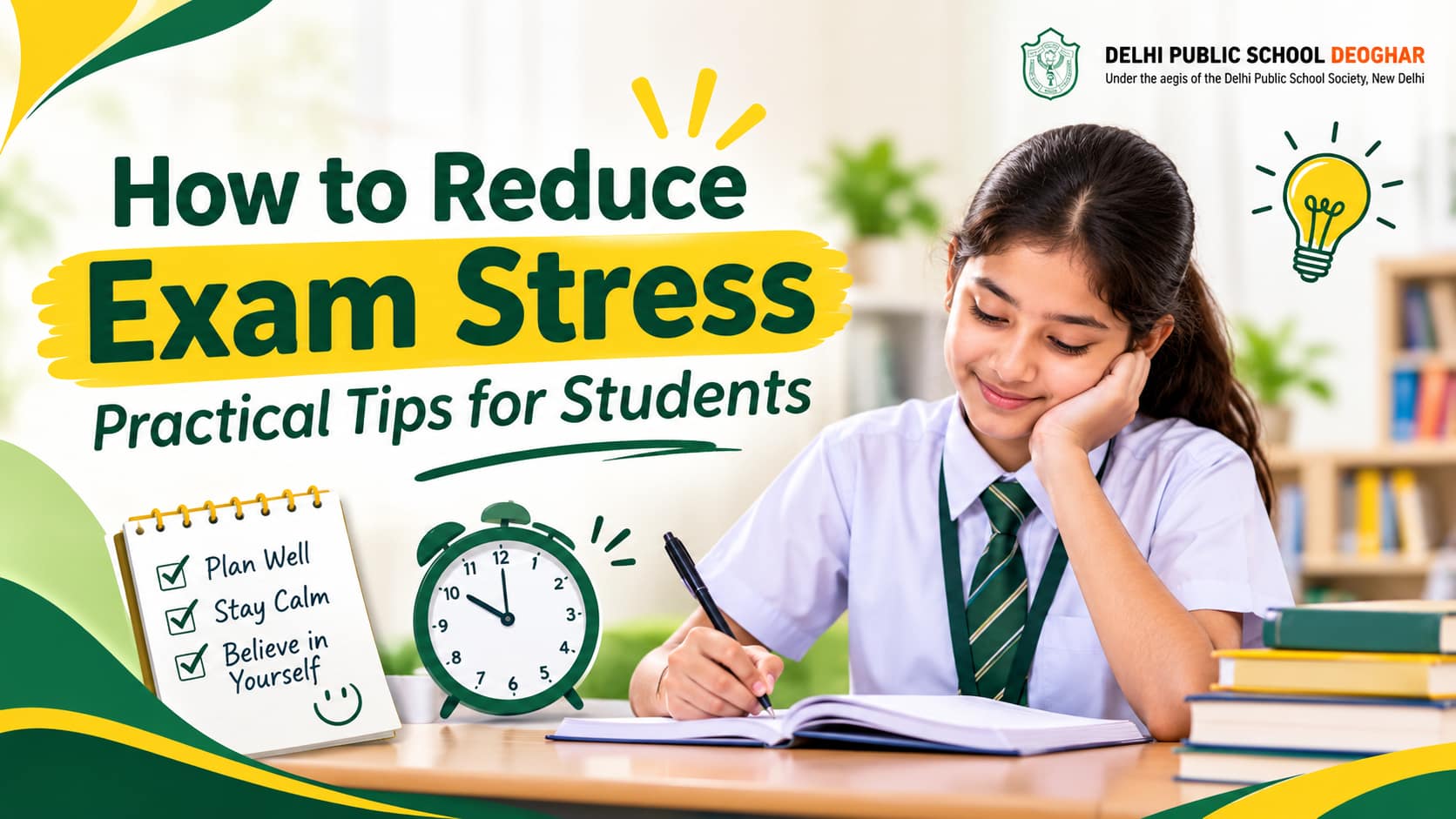
How to Reduce Exam Stress in Students
Dps Deoghar Team
November 15, 2026
To reduce exam stress, students should follow a realistic study schedule, sleep 8 to 10 hours, eat well, practise slow breathing and take short breaks, while parents give calm support instead of pressure.
Every year, as exam dates come closer, many Indian homes ask the same question: how to reduce exam stress? Students worry about marks, parents worry about their child, and everyone worries about the result. The good news is that small daily habits make a big difference. A steady routine, enough sleep, simple relaxation and calm support from parents can bring stress down within days. This guide explains exam stress in students and shares seven practical tips that students and parents can start today.
Key Takeaways
• Plan early: A realistic study schedule split into small daily goals lowers panic far more than last-minute marathon study.
• Protect the basics: Sleep of 8 to 10 hours, regular meals, water and 30 minutes of movement help the brain focus and remember.
• Breathe to reset: Two minutes of slow breathing calms the body's stress response before and during an exam.
• Parents set the mood: Calm questions, no comparisons and praise for effort help children more than pressure for marks.
• Know when to ask for help: Constant sleeplessness, panic or hopelessness before exams need a counsellor's support, not just more study.
What Is Exam Stress and Why Does It Affect Students?
Exam stress is the worry, tension and pressure a student feels before or during tests. A little of it is healthy because it keeps students alert. It becomes a problem when it starts to affect sleep, appetite, mood or concentration.
Exam stress in students usually grows from a few common sources. Board exam expectations, competitive entrance tests, comparison with classmates and fear of disappointing parents top the list. In India, student exam pressure also comes from family and social ideas about marks and careers. Many students also have no clear plan, so the syllabus feels like one huge mountain.
Exam anxiety in students shows up in different ways. Some children get headaches, stomach aches or trouble sleeping. Others become irritable, avoid their books or go blank on questions they actually know. Spotting these signs early is the first step to helping.
How to Reduce Exam Stress: 7 Practical Tips
The best way to manage exam stress is to combine a clear study plan, healthy routines and relaxation techniques. These ways to reduce exam stress work on different parts of the problem: the mind, the body and the study method. Good exam stress management for students always covers all three.
1. Build a realistic study schedule. List every subject and chapter, then divide them across the weeks left. A good study schedule for students has two or three focused sessions of 45 to 50 minutes, with a 10-minute break after each. Keep one lighter day every week for revision and rest. Place the hardest topics in the morning, when the mind is fresh.
2. Break the syllabus into small goals. A full syllabus feels heavy, but one chapter feels doable. Write three clear goals each day, such as finishing a chapter, solving ten numerical problems and revising one formula sheet. Checking the school curriculum also helps you plan chapters in the right order. These exam preparation tips stop the habit of leaving everything for the last week.
3. Sleep, eat and drink well. Sleep is when the brain stores what you studied, and teenagers need about 8 to 10 hours. Staying up all night lowers memory and raises anxiety. Healthy study habits also include regular meals with fruit, nuts, dal, curd and vegetables, plus enough water. Limit cold drinks, energy drinks and junk food in exam weeks.
4. Move your body every day. Even 30 minutes of walking, cycling, yoga or a game releases tension and lifts mood. Sports are not a waste of study time. DPS Deoghar follows a "Sports & Wellness" approach that treats physical activity as part of growth, and its sports page shows how seriously the school takes it. Keeping a game or workout in your exam routine keeps energy high and thoughts clear.
5. Practise simple relaxation techniques. Try box breathing: breathe in for four counts, hold for four, breathe out for four and hold for four. Repeat for two minutes. Other relaxation techniques for students include muscle relaxation, short guided meditation and calm music. Practise them daily, not only on exam morning, so they work when you need them.
6. Revise actively, not passively. Re-reading notes feels productive but rarely sticks. Close the book and write what you remember instead. Solve previous year papers and sample papers in timed conditions. Revision works best in a quiet space, whether at home or in the school library, and every solved paper builds confidence.
7. Limit comparison and screen distractions. Comparing marks with friends or cousins only raises anxiety, so focus on your own progress. Keep the phone in another room during study blocks. Avoid exam-result rumours and panic in group chats. Use a timer so that breaks stay short.
How Can Parents Help Children with Exam Stress?
Parents can help most by staying calm, listening without judging and keeping the home routine steady. Parental support during exams is less about pushing and more about protecting your child's confidence.
Here is what works well in most homes:
• Ask open questions like "How are you feeling about tomorrow's paper?" instead of "How much is left?"
• Praise effort and consistency, not only marks.
• Avoid comparing your child with siblings, neighbours or toppers.
• Keep meals, sleep time and a quiet study space the same every day.
• Allow short breaks for play, music or a family chat.
Children also absorb the mood of the house. If parents panic, children feel it. Remind your child that one exam does not decide their future. Hobbies and school activities build confidence that goes beyond marks, so do not cut them out completely during exam season. At DPS Deoghar, we also believe in strong collaboration between school and parents, so stay in touch with your child's teachers if you notice worry building up.
How to Stay Calm During Exams and Maintain Focus
To stay calm during exams, take a few slow breaths, read the whole paper first and begin with the questions you know best. Maintaining focus during exams is easier when you plan your time for each section.
On the night before, pack your bag, do light revision and avoid learning new topics. Aim to sleep on time. On the morning of the exam, eat a proper breakfast and reach the centre early. Once inside, use the reading time to mark easy questions and divide your time across sections.
If your mind goes blank, put the pencil down, breathe slowly for ten seconds and move to the next question. Come back later, because the answer often returns once the pressure drops. Replace harsh thoughts like "I will fail" with "I will do my best with what I know." After the paper, avoid long discussions about answers and move on to the next subject.
Signs of Exam Anxiety That Need Extra Support
Stress is normal, but some signs need attention. Watch for these in your child or in yourself:
• Poor sleep for many nights in a row
• Frequent headaches or stomach pain without a medical cause
• Loss of appetite or sudden overeating
• Crying, anger or withdrawal from family and friends
• Refusing to attend exams or school
• Statements such as "I cannot do this" or "there is no use"
If these signs last more than two weeks or keep getting worse, speak to a school counsellor or a doctor. If a student talks about harming themselves, seek help right away. In India, Tele-MANAS offers free 24x7 mental health support on 14416.
Conclusion: Calm Preparation Leads to Better Results
Learning how to reduce exam stress is about building healthy routines, not about removing pressure completely. A realistic schedule, good sleep, daily movement, relaxation and steady parental support help students feel prepared and confident. Start with one or two tips this week and add more as habits form.
At DPS Deoghar, our approach combines academic excellence with holistic development, including wellness, safety and active engagement for every child. To learn more about our approach or to speak with our team, contact us at +91 9296786335 or +91 9296786343, or write to info@dpsdeoghar.com.
FAQs
Take two minutes for slow breathing, drink water, and do a light review of key points only. Avoid new topics and late-night study. A short walk and an early bedtime calm the mind and improve recall the next morning.
Quality matters more than hours. Senior students usually do well with 5 to 7 focused hours on holidays, split into sessions with breaks. Younger students need far less. Stop when focus drops and rest instead.
Stress triggers the body's alert response, which temporarily blocks memory recall. Slow breathing, skipping the tough question and returning later usually helps. Regular timed practice before the exam makes this blank feeling less likely.
Choose light, regular meals such as dal, rice, roti, vegetables, curd, fruit and nuts. Drink enough water. Limit oily snacks, cold drinks and energy drinks, because they can cause tiredness, restlessness and poor sleep.
Stay calm, listen without judging and keep routines steady. Praise effort, avoid comparisons and provide a quiet study space with healthy meals. Simple reassurance that marks do not define worth reduces pressure the most.
Some nervousness is normal. Seek help if poor sleep, panic, physical complaints or hopeless thoughts continue for more than two weeks. Speak to a school counsellor or doctor. Tele-MANAS (14416) offers free support in India.
Make a short list of the most important topics and revise those first. Solve sample papers to find weak areas. Do not compare yourself with others. A focused plan for the days left works better than panic.
Yes, for many students. Even 10 minutes of yoga, breathing exercises or guided meditation can lower tension and improve focus. The key is to practise daily, not only on the day of the exam.
Get in Touch
Still have questions? Fill out the form below and our team will get back to you shortly.